
A heated pool goes from summer use to year-round use. But the wrong heating choice gives a high bill or water that is not warm enough. This guide explains the difference and how power is determined.
Two powers must be calculated
- Initial heat-up power: the energy needed to raise the whole water volume from its current temperature to the target in an acceptable time (for example two days).
- Heat-loss makeup power: the energy lost from the water surface (evaporation and air) which must be replaced continuously to hold the temperature.
Together they set the capacity, which we then review against the cover, wind and whether the pool is indoor or outdoor, because these change the loss a lot.
Types of heating
- Heat pump: extracts heat from the air. Running cost is usually lower; efficiency drops in severe cold.
- Gas boiler: fast and works in any weather; suits large pools and resorts.
- Electric heater: suits small volumes and usually costs more to run.
The cover: the cheapest saving
A night cover cuts surface loss a lot, so the required power is lower: smaller equipment and cheaper running.
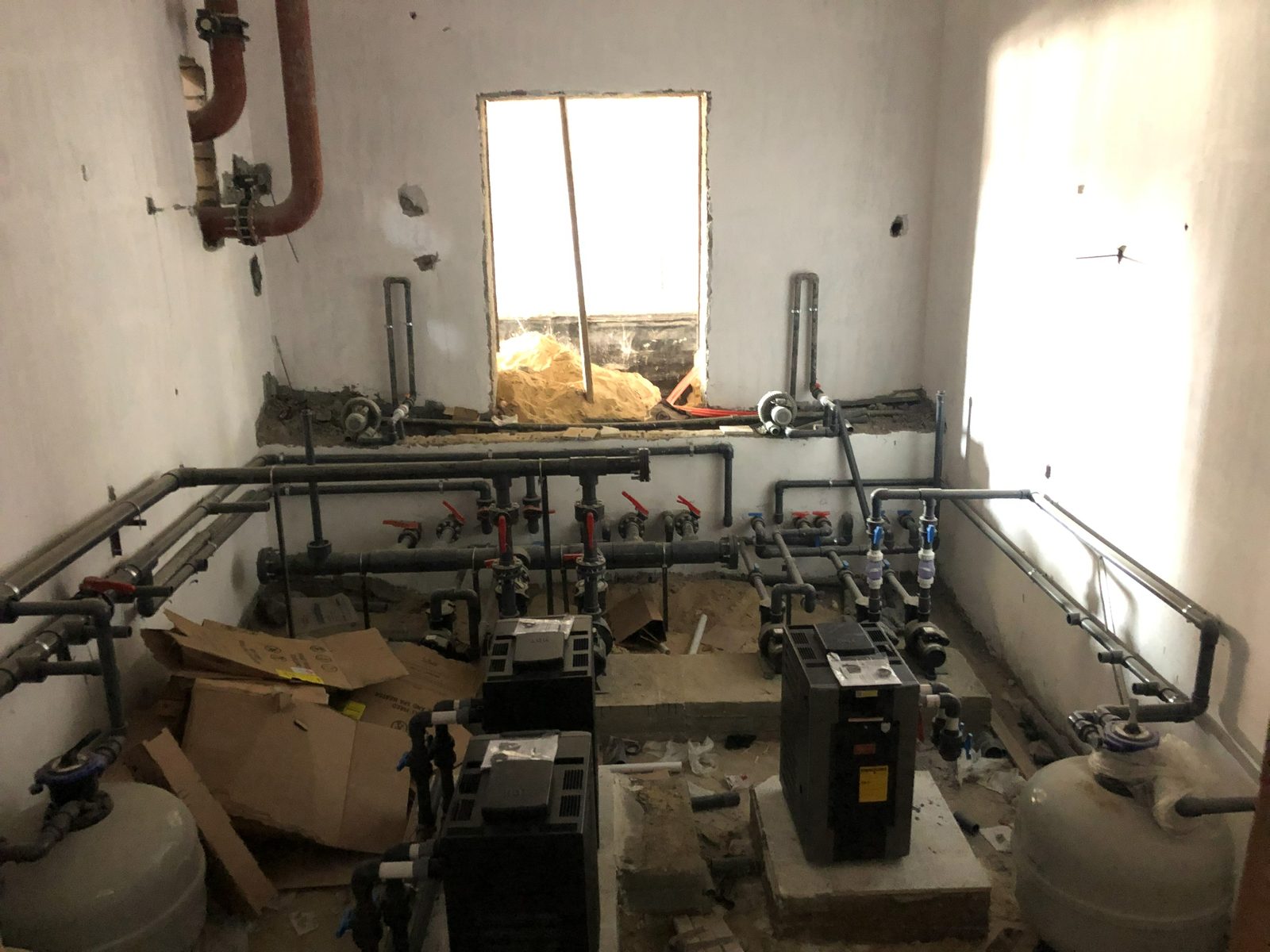
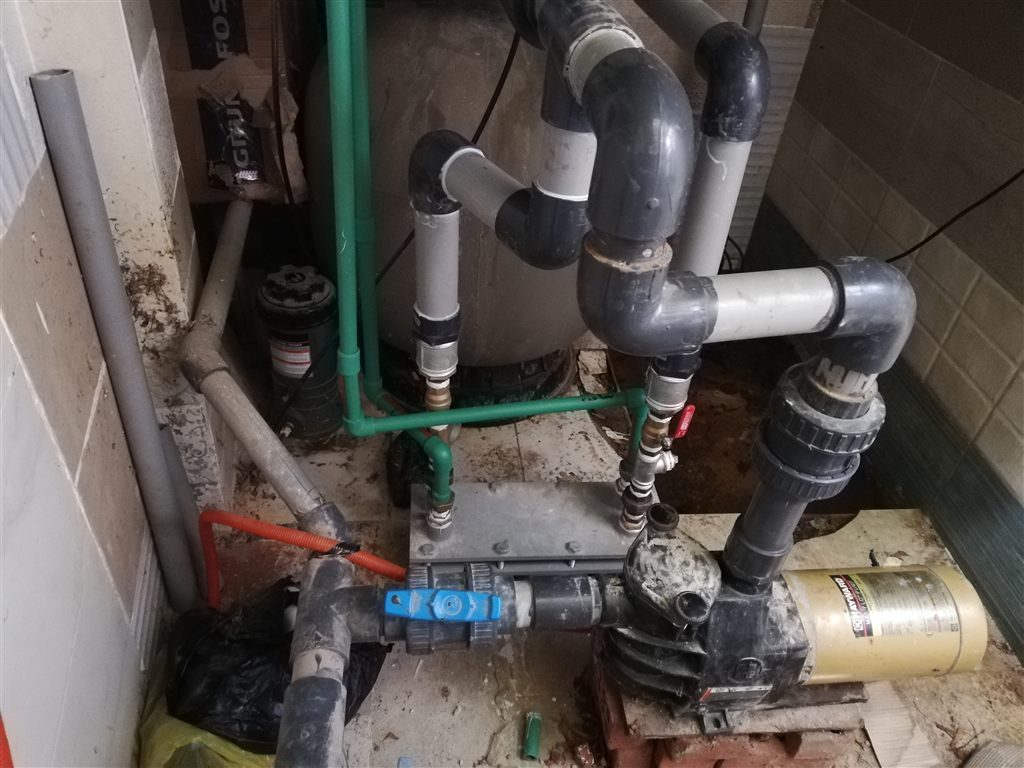
The plant room
The plant room gathers pumps, filters, exchanger and heater. We arrange pipes and valves clearly so maintenance is easy, and we consider ventilation and drainage.
Frequently asked questions
Heat pump or boiler?
If you heat most of the year in a relatively warm climate, a heat pump is usually cheaper to run. For a large pool or very cold weather, a boiler suits better.
How long until the pool warms?
It depends on volume and power. We usually design for about two days for the first heat-up.
Is a cover necessary?
Not necessary, but it saves energy and allows smaller equipment.
Read also: Swimming pool heating · Photos from our sites